
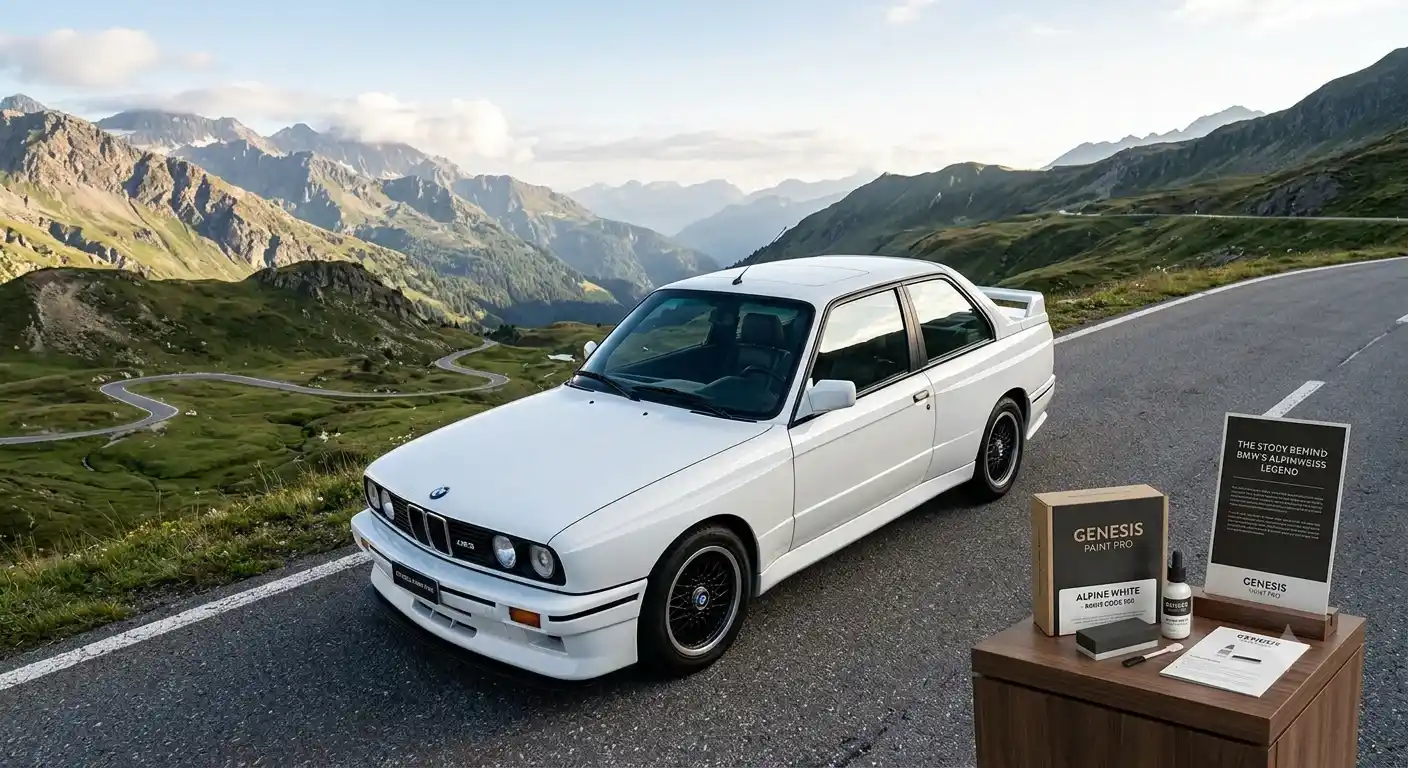
What is BMW Alpine White? The Story Behind the BMW's Most Iconic Car Color
Genesis Paint Pro Expert
Coating Specialist
When you think of modern performance cars, bold greens, vibrant blues, and eye-searing yellows often come to mind. But for decades, BMW proved that you don’t need an outrageous hue to command attention on the track or the street. Sometimes, all it takes is a crisp, brilliant coat of white.
Enter Alpine White (Alpinweiß in German).
First introduced in the late 1970s, Alpine White isn't just another factory paint option—it is arguably the most recognizable and enduring color in BMW’s history. From dominant M3 race cars to everyday 3 Series sedans, this shade has defined the Bavarian automaker's design language for over four decades.
So, how did a simple non-metallic white become a legend among car enthusiasts worldwide? Let’s dive into the history, the evolution, and how to keep this legendary paint finish looking flawless.
The Origins: Born for the Racetrack
BMW’s deep connection with white paint goes back to its roots in motorsport. In the early days of European racing, national colors designated a team's country of origin—British Racing Green for Great Britain, Rosso Corsa for Italy, and traditional white (and later silver) for Germany.
When BMW Motorsport GmbH took the racing world by storm in the late 1970s and 1980s, white served as the perfect, high-contrast canvas for the iconic tri-color M stripes (Blue, Purple, and Red).
When the legendary E30 M3 debuted in 1986 to homologate BMW's touring cars for track competition, Alpine White was the hero finish. Paired with flared wheel arches and a massive rear wing, Alpinweiß became the unofficial uniform of BMW performance.
The Three Generations of Alpine White
Unlike metallic shades that come and go with design trends, Alpine White has remained a staple of BMW’s lineup for over 40 years. However, it hasn't stayed completely static—it has evolved across three distinct paint codes:
1. Alpine White I (Paint Code 146)
Introduced in 1978, Alpine White I was a single-stage, non-metallic shade offered on classics like the E21 3 Series, early E28 5 Series, and the legendary M1 supercar. It carried a slightly warmer, creamier undertone compared to modern whites.
2. Alpine White II (Paint Code 218)
Arriving in 1987, Alpine White II refined the formula. It offered a brighter, cleaner aesthetic that defined the peak era of classic BMWs, including the late-model E30s, E34 5 Series, and E32 7 Series.
3. Alpine White III (Paint Code 300)
Debuting in 1993, Alpine White III (Paint Code 300) is the ultimate iteration and remains in production today. It is a brilliant, pure, cool-toned white that reflects light sharply without leaning too warm or overly blue. Paint Code 300 is easily one of the most produced car color codes in modern automotive history.
Why Is Alpine White So Popular Among Enthusiasts?
What makes Alpine White stand out in a sea of metallic paints and pearl finishes?
Pure, High-Contrast Aesthetics: Without metallic flakes to alter how light reflects off the body panels, Alpine White highlights every crisp line, shadow, and aerodynamic crease of a car’s bodywork.
Motorsport Heritage: It instantly evokes memories of classic DTM touring car champions, rally cars, and legendary track machines.
Timeless Elegance: While trendy colors can quickly look dated, a clean white BMW looks just as stylish 20 years later as it did on day one.
Ease of Maintenance: Non-metallic whites are generally easier to touch up, blend, and detail than complex multi-coat pearls or metallic finishes.
How to Maintain and Repair BMW Alpine White
While white paint is forgiving when it comes to hiding minor dust or light swirl marks, daily driving takes a toll. Road tar, iron filings, stone chips, and UV exposure can quickly spoil that bright, factory finish.
Here’s how to keep your Alpine White paint looking fresh:
1. Decontaminate Regularly
White paint highlights embedded contaminants like brake dust and road grime. Use an iron remover and a clay bar twice a year to pull embedded particles out of the clear coat before washing.
2. Fix Stone Chips and Scratches Fast
Because Alpine White is a bright, high-contrast shade, dark rock chips through to the primer or bare metal stick out like a sore thumb. Worse, exposed metal will rust over time. Addressing minor rock chips on your hood or front bumper immediately keeps the finish seamless and prevents long-term corrosion.
3. Keep It Protected
A durable ceramic coating or synthetic sealant will keep environmental contaminants like bird droppings and tree sap from staining the clear coat, ensuring your Alpinweiß retains its crisp gloss.
Restore Your BMW's Finish with Genesis Paint Pro
Whether you're driving a classic E30 M3 or a modern G20 3 Series in Paint Code 300, keeping your exterior immaculate is key to preserving its appeal and resale value.
At Genesis Paint Pro, we offer precision, exact-color-matched touch-up kits formulated to match factory BMW shades perfectly. Easily repair rock chips, fine scratches, and bumper blemishes at home with professional-grade paint, clear coat, and applicator tools.
Looking to repair your BMW's paint? Find your exact BMW color code in our store today and keep your ride looking showroom ready.